
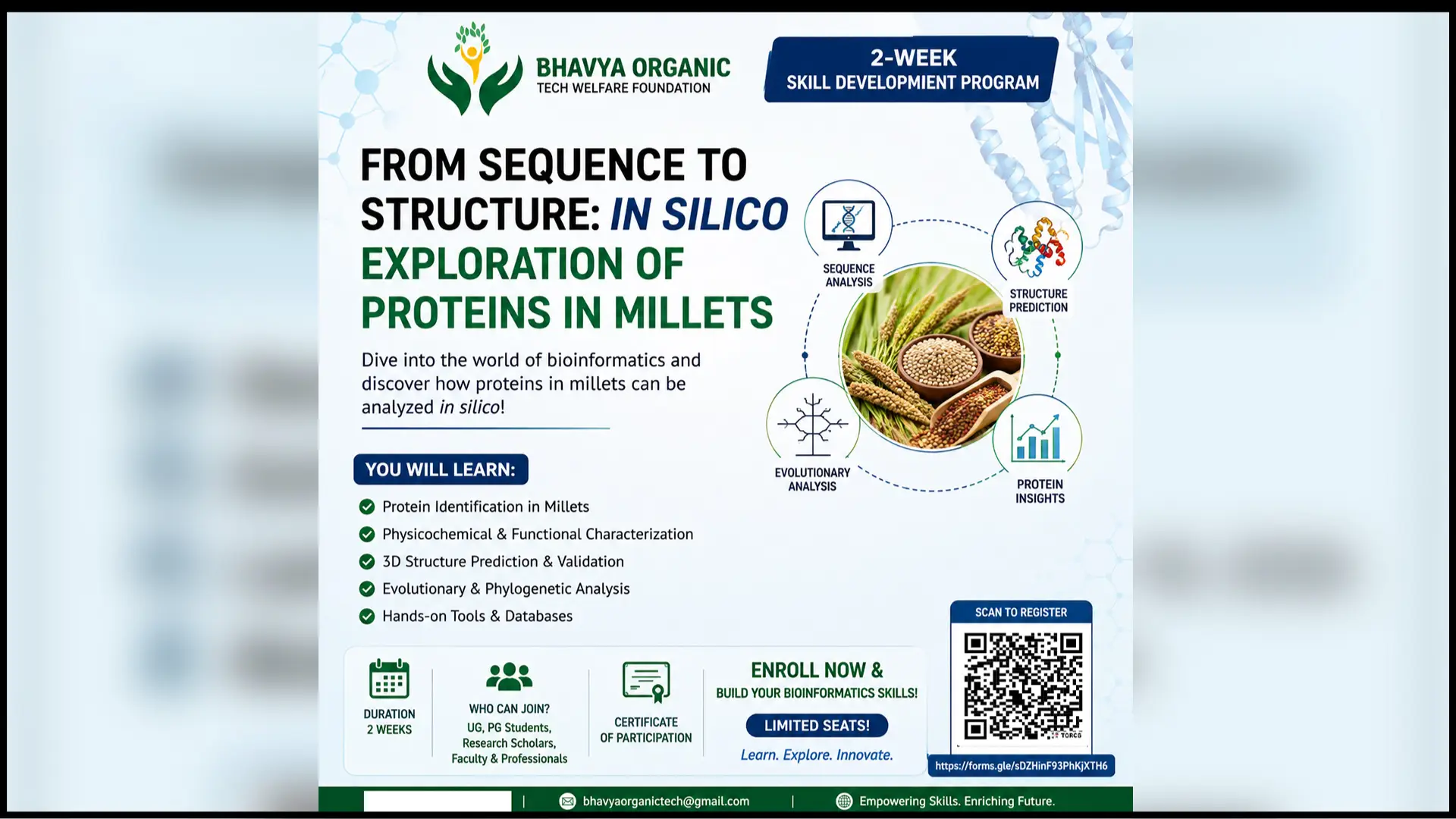
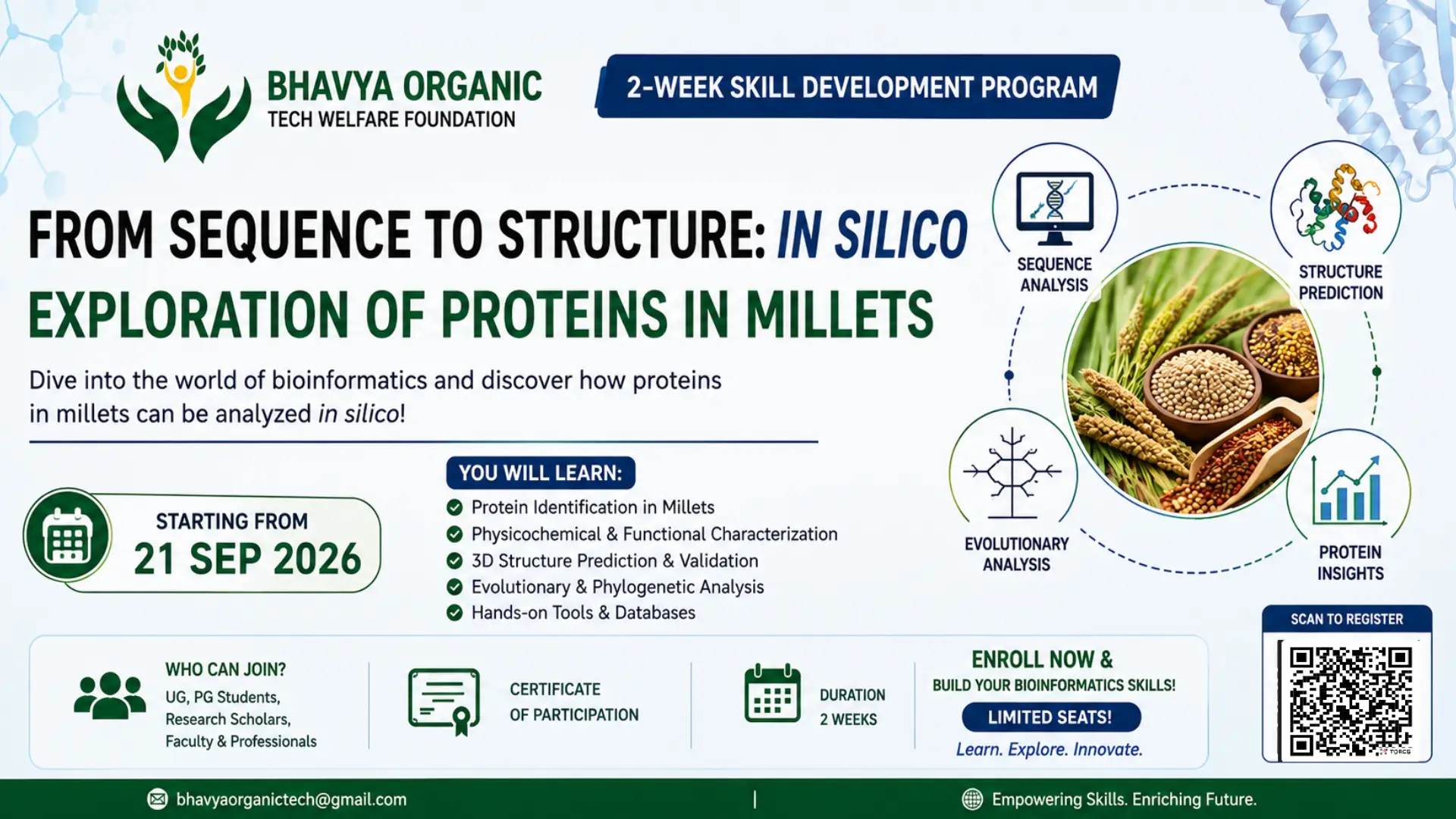
From Sequence to Structure: In Silico Exploration of Proteins in Millets
Dive into the world of bioinformatics and discover how proteins in millets can be analyzed in silico — by Bhavya Organic Tech Welfare Foundation.
Register Now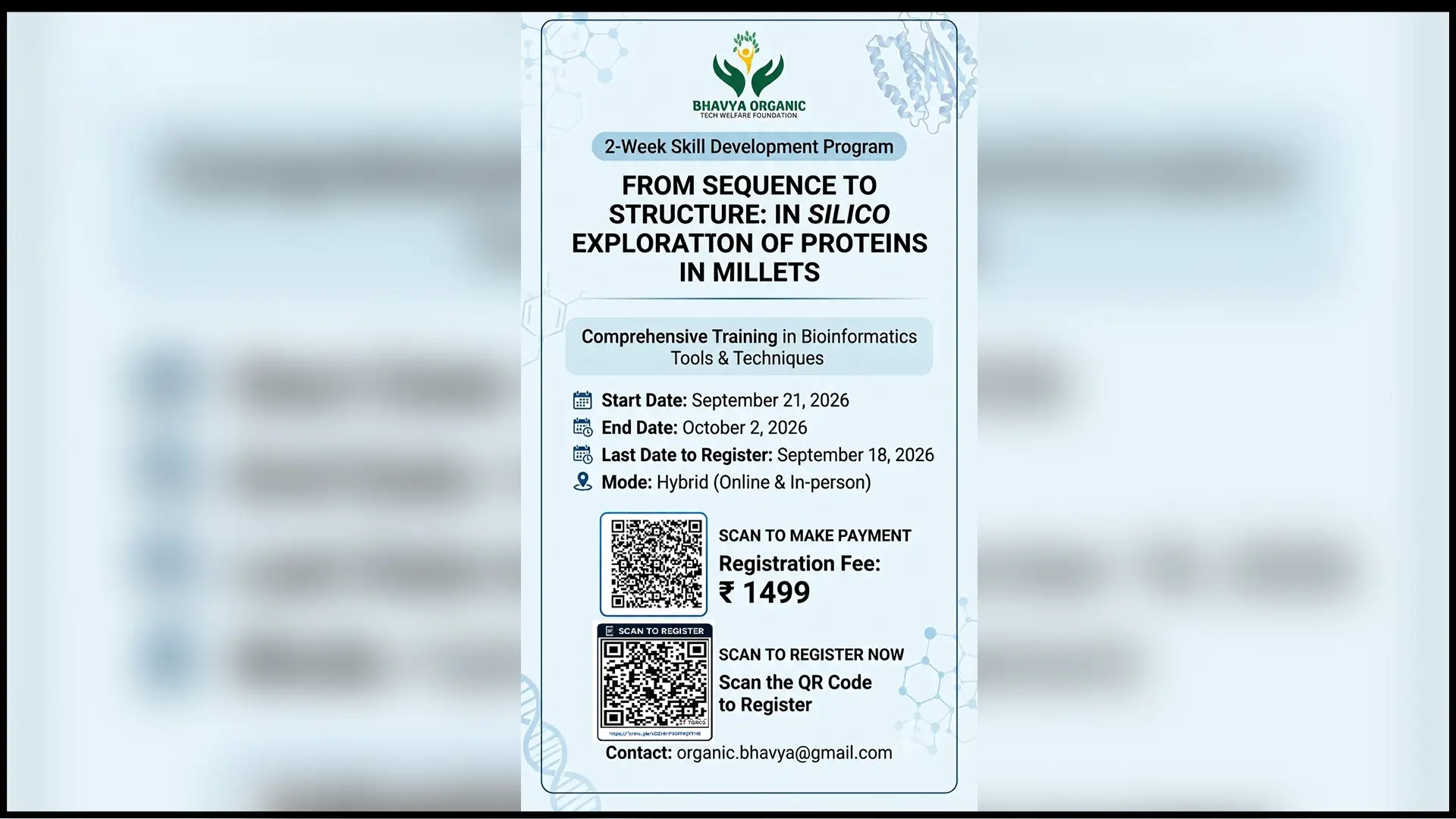
You Will Learn
🧬 Protein Identification in Millets
Millets mein proteins ko identify karna in-silico tools se.
⚗️ Physicochemical & Functional Characterization
Protein ke gun aur functional behaviour ko samajhna.
🧩 3D Structure Prediction & Validation
Protein ki 3D structure predict aur validate karna.
🌿 Evolutionary & Phylogenetic Analysis
Proteins ka evolutionary background aur phylogeny study karna.
🛠️ Hands-on Tools & Databases
Bioinformatics ke real tools aur databases pe practical experience.
From Sequence to Structure: In Silico Exploration of Proteins in Millets
A hands-on bioinformatics training program that walks you through 18 guided modules — from raw protein sequences to 3D structure, function, and evolution — using millet proteins as the working dataset throughout.
Millets are nutrient-dense — this program shows you how to prove it computationally
Millets carry storage proteins, enzymes, and stress-response proteins that are still under-characterised at the structural level. This program trains you to take that gap seriously: starting from public sequence databases and ending with a validated 3D structure, a phylogenetic tree, and a written comparative report.
Every exercise uses real millet protein sequences, so what you learn in Week 1 becomes the dataset you analyse, visualise, and defend in Week 2's mini research project.
Delivered by Bhavya Organic Tech Welfare Foundation, the format is hybrid — join live sessions online or sit in-person, with the same datasets, tools, and mentor support either way.
Four phases, eighteen modules, one dataset
Each phase builds directly on the last — the dataset you clean in Phase 1 is the dataset you fold, validate, and compare in Phases 3 and 4.
Introduction & Target Protein Selection
Introduction to Millet Bioinformatics
Millets, their nutritional importance, and the core protein bioinformatics databases you'll use throughout.
Selection of Target Protein
Choosing a protein family to work with — prolamins, globulins, or seed storage proteins.
Protein Sequence Retrieval
Pulling sequences of your selected protein across different millet species.
Dataset Preparation
Verifying sequences, removing duplicates, and assembling a multi-FASTA dataset.
Protein Characterization & Comparative Analysis
Physicochemical Characterization
Molecular weight, pI, instability index, aliphatic index, and GRAVY analysis.
Homology and Similarity Analysis
Identifying homologous proteins and quantifying sequence similarity.
Conserved Domain Analysis
Locating functional domains and placing proteins into families.
Multiple Sequence Alignment
Comparing sequences side by side and identifying conserved regions.
Motif Analysis
Identifying conserved motifs and functional signatures within the alignment.
Structure, Function & Evolution
Secondary Structure Prediction
Predicting alpha helices, beta sheets, and coils along the sequence.
Tertiary Structure Prediction
Predicting or retrieving the 3D structure of your target protein.
Protein Structure Visualization
Visualising and comparing structures across millet species.
Structure Validation
Assessing model quality with a Ramachandran plot and related checks.
Functional Annotation
Analysing molecular function, biological process, and pathway involvement.
Phylogenetic Analysis
Building the evolutionary tree of your protein across millet species.
Data Analysis & Project
Comparative Protein Analysis
Comparing sequence, structure, motifs, domains, and properties across millets.
Data Interpretation
Organising results statistically and interpreting what they mean biologically.
Mini Research Project & Report Writing
Bringing every analysis together into a final report and presentation.
Everything you need to plan around it
Reserve your seat
18 modules, one dataset, a completed research project by the end of Week 2 — delivered by Bhavya Organic Tech Welfare Foundation.
Your seat includes
- All 18 live modules, online or in-person
- Millet protein datasets used in every session
- Mentor support through the mini research project
- Certificate on completion
Fill the registration form
Scan the code with your phone camera to open the registration form and enter your details.
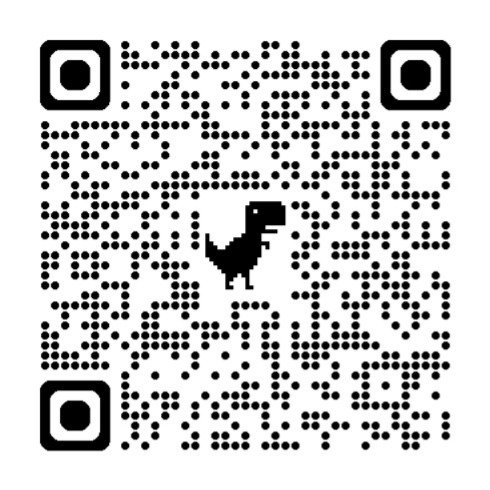 Registration form — scan or tap to open
Pay the ₹1,499 fee
Scan the code in any UPI app to pay the registration fee, then keep the payment screenshot.
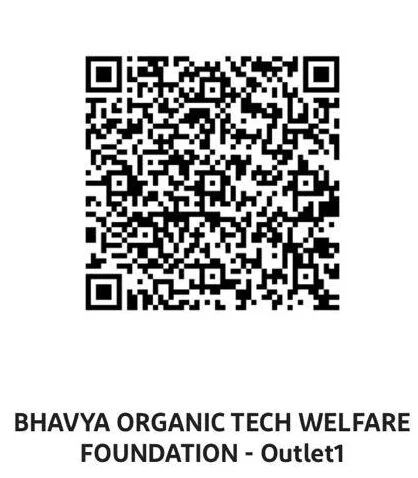 Fee payment — scan or tap to open